Splash of Coca Cola Clip Art Splash of Water

Coca-Cola is the third most valuable make internationally — only behind Apple and Google — with about $90 billion in avails. It'southward the drink of choice for millions of people all across the globe, and nearly anybody recognizes the iconic logo of the popular soda, even if they don't drink it themselves.
However, many people don't know the strange story behind the start of the company and all the intriguing facts nearly the brand throughout the decades. Read on to acquire more about the interesting history behind the Coca-Cola brand.
A Debilitating Injury
Coca-Cola actually had a pretty gruesome start. During the Civil War, a Confederate colonel named John Pemberton suffered a terrible saber wound to the breast and had to exist carried away from the fight. Because the deep wound, the soldiers assumed Colonel Pemberton would die. To ease his pain during what they expected to be his last few hours, doctors gave him a great deal of morphine.

Unfortunately, Pemberton became addicted to the morphine that helped him survive. He even started his own pharmacy to gain admission to an unlimited supply of the drug. His reliance on morphine lasted for nearly a decade, but information technology was besides the starting time of the most pop soda on earth.
Searching for a Cure
With the addiction taking a toll on his body, Pemberton started working on a cure to kick the habit. During the late 1800s, nigh cures for illnesses were "patent medicines" that were over-the-counter remedies that were promoted without regard for effectiveness or potential side effects. In virtually cases, they weren't very different from exotic liquors at the time.

Pemberton heard about coca wine, a mixture of wine and cocaine that was popular in France. Using coca wine, he made his first product, Pemberton's French Vino Coca Nerve Tonic, which was shipped to pharmacies to be mixed with soda water and dispensed past trained professionals.
Effects of Prohibition
In 1886, Atlanta and other parts of Georgia implemented prohibition laws, banning the production and sale of alcohol. That meant Pemberton could no longer sell his French Wine Coca Nerve Tonic as it was. Prohibition laws did not ban the utilize of cocaine, so Pemberton decided to reformulate his product into a non-alcoholic product that included 9 milligrams of cocaine simply no vino.

The production was very popular and ultimately stopped using cocaine in the formulation afterward 1903. Even so, ane of Coke'south partners, Stepan Company, has the merely agile license to import and process coca leaves (from which cocaine is fabricated).
The Production Procedure
The actual production process behind Coca-Cola was unique for its time and is ane of the secrets backside the brand'due south success. Instead of investing in facilities and distributors to create and sell the production, Pemberton focused on making the product at his own plant. He then shipped the syrup out to contractors and other businesses to mix information technology and sell it exactly how they wanted.

The flexible production-sales-distribution procedure immune for local distributors to experiment with marketing and delivery without harming the reputation of the brand. Coca-Cola dispensaries popped up throughout the South, selling the popular drink for five cents a glass.
New Ownership
Sadly, John Pemberton died in 1888 from stomach cancer that was likely related to his addiction to morphine. The flexible structure of his company led to some major legal problems after he was gone. No ane was clear nigh ownership and responsibilities within the visitor.

One of Pemberton's partners, Asa Candler, stated he bought a controlling stake in the visitor before Pemberton died. Pemberton's son, Charles, however, claimed he owned the rights to the make proper noun and that Candler was using the production recipe under an informal license. Candler eventually paid off everyone who had a pale in the brand so he could assume complete control.
An Unforgettable Logo
Past 1891, Candler was the sole proprietor of Coca-Cola subsequently investing $3,000 to purchase all shares and rights. Under his direction, Coca-Cola was positively transformed forever. In 1885, earlier Pemberton died, Frank Stonemason Robinson — either Candler's or Pemberton's bookkeeper — wrote out the name of the business organisation in Spencerian script.

At the time, every child enrolled in schoolhouse had to learn the special script, so it was well known. When he saw it, Candler loved the look so much that he decided to keep it as the official logo for the company. The famed Coca-Cola logo is now known all over the world.
Free Samples
Candler was so invested in the visitor that he was always working on new marketing tactics to get the Coca-Cola name out there. As early as 1886, he began passing out little slips of paper that could exist redeemed for a single glass of Coca-Cola.

Some historians believe this was the showtime time a company issued what could pass as coupons for free samples of its product to create marketing buzz. Between 1894 and 1913, approximately one in nine Americans had tasted a free Coke using ane of these coupons. This tactic helped grow the company's consumer base, turning sample testers into loyal customers.
Bottling the Product
Originally, Candler focused on selling the Coca-Cola syrup to pharmacies and fountains, which had always been the product's master distributors. Still, he began working with a Vicksburg-based benefactor in 1891 to come with preliminary ideas for bottling the production. 8 years later on, Coca-Cola ready its kickoff bottling plant in Chattanooga through another independent distributor.

Bottled Coke turned out to be a huge success. Candler and his team focused on turning the product into a cool, refreshing drink anyone could enjoy at any fourth dimension instead of a cure for random illnesses — and it paid off in a big way. The visitor stopped marketing and selling the product to pharmacies and turned to individual consumers.
Santa Loves Coke
Before Santa Claus became a jolly, fat man in a red suit, he was simply known equally Father Christmas, a lean, tall human in a red, dark-green or brownish arrange. Fifty-fifty more interesting, did you know that Coca-Cola is responsible for turning Santa into the huge Christmas figurehead he is today?

In its advertising, the company used Santa Claus to help boost sales during the wintertime months. He was shown passing out gifts and cuddling with kids as he drank a dainty glass of Coca-Cola. For the concluding century, kids in the United States have grown upward with the myth of Santa Claus and passed that tradition along to their own families, along with the association of the soda with the character.
The Struggle Overseas
Even during its early years, Coca-Cola was exported overseas informally, particularly to Republic of cuba. In fact, the first rum and Coke was reportedly mixed in a Havana bar in 1900. A Signal Corps officer raised a toast with the drink after Cuba'due south newly won freedom from Spain, and the beverage became a staple in nightclubs after that.

Cuba was an exception in terms of early on export success. Candler's son and successor tried to popularize the drinkable overseas in Europe, particularly in the United kingdom, Germany and France, but it wasn't successful at get-go. The thought of drinking a not-alcoholic beverage, especially one made by Americans, didn't become over well at the time.
A New Owner
In 1919, Candler's children sold The Coca-Cola Company to a group of investors led by Atlanta businessman Ernest Woodruff for $25 one thousand thousand. Woodruff took the visitor public and launched a plan to grow the business overseas. He realized that bottles would do much better overseas than the fountains that were still popular in the U.S.

To achieve his program, Woodruff invested in developing metal-topped coolers to keep the bottles cold and then invented a half-dozen-pack with a handle. People could then purchase more Coke to continue their coolers filled. He also created the coin-operated libation that dispensed a unmarried bottle for a nickel, which became popular at gas stations.
Breaking Through Overseas
Coca-Cola attempted to market the product overseas again in 1925. The company opened an part solely dedicated to selling the drink worldwide. During the late 1920s and early 1930s, the company advertised, gave away and sold Coca-Cola all over Europe, marketing information technology as a cool, refreshing import all the way from America.

Coke also created a special "consign bottle" for strange consumers. The bottles were night greenish and inspired past champagne magnums. Executives believed the French, in particular, would be more likely to drinkable the product if it looked like it was wine. The bottles even had a gold foil seal over the cap.
Production Association
Woodruff was full of marketing ideas to sell the product. 1 of those ideas was to sponsor the U.S. Olympic team in 1928. The squad arrived in Amsterdam forth with forty,000 bottles of Coca-Cola. The result? Coca-Cola products continue to be highlighted at the Olympics today. The 1996 Centenary Games were even held in Atlanta, the current home of Coca-Cola'southward corporate headquarters.

Woodruff was also able to brand connections between Coca-Cola and the U.S military. During World War Two, he promised active soldiers they could enjoy a cold Coke anywhere they went during the war. Outside of a few isolated places, he stuck to his word. This as well immune for more foreigners to buy the drinkable.
Roofing Time
In 1950, the production became the get-go to be featured on the embrace of Time magazine. The historic embrace featured an illustration of the Earth drinking from a Coke bottle. This showed just how popular Coca-Cola had become, not merely in the States but all over the globe.

The mag originally wanted to go in a completely different direction. The thought was to put a photo of Robert Woodruff on the comprehend, but he refused. He believed the production was the only important element of the visitor and should, therefore, be the only thing featured on the magazine comprehend. You can't mistake that logic — the comprehend was certainly unforgettable.
Changing Things Up
Later World War II, Coca-Cola continued to aggrandize in terms of packaging and developing new products. The trademark "Coke," which was first used in advertising in 1941, was officially registered in 1945. The following year, the company purchased the rights to Fanta, a soft beverage that had been developed in Federal republic of germany. The contoured Coke canteen, which was released in 1916, was registered as a trademark in 1960.

Continuing to try new products, The Coca-Cola Company released the pop lemon-lime potable known equally Sprite in 1961 and its kickoff diet cola (Tab) in 1963. The company introduced not-carbonated citrus juices after its purchase of Infinitesimal Maid Corporation in 1960 and then added the brand Fresca in 1966.
New Coke Fail
In 1985, the company infamously inverse the formula of Coca-Cola to what was unremarkably referred to as "New Coke." Consumers hated the new soda formula, and plunging sales reflected the outraged backlash. The new formula was just on sale to the public for 79 days before the company brought back the original formula, which was marketed from that betoken on as "Coca-Cola Archetype."

Interestingly, "New Coke" was brought back as a limited release flavor in the summer of 2019. The company re-released it in partnership with the popular Netflix series Stranger Things, which is ready in the 1980s. Fans were able to try the formula to get a gustation of what "New Coke" was similar — for 79 days at to the lowest degree.
Coke in the Morning
In the late 1980s, Coca-Cola discovered that roughly 12% of its customers consumed the caffeinated potable in the morning instead of java. In light of this discovery, the visitor decided to do an aggressive marketing entrada promoting Coke as a morning selection-me-up.
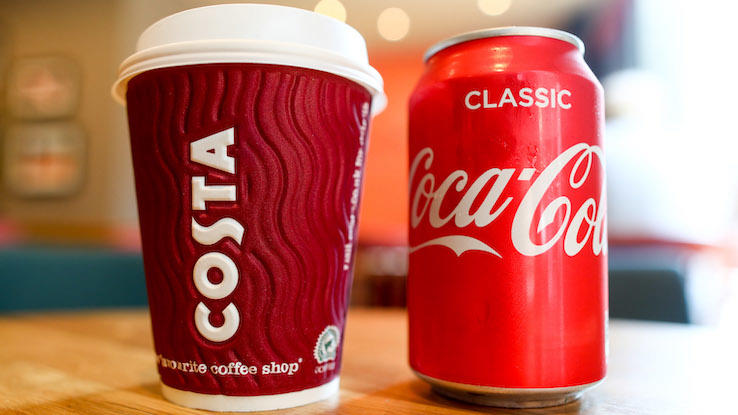
The company ran its "Coke in the Morning" campaign in several examination cities in 1988, stating that information technology might be easier and quicker to just chug a cold Coke rather than going through the procedure of making coffee each morning. Of course, the company was conscientious not to mention giving upwards orange juice for the soda. Subsequently all, the company also owns Minute Maid.
"MagiCans" Promotion
In a continuous attempt to promote the make, Coca-Cola came upward with a pretty funky marketing idea in 1990. The idea was to run a promotion where certain cans had cash or coupons instead of coke. That meant it was also necessary to forestall consumers from just picking up cans to discover the ones without soda in them.

Instead, these "MagiCans" with prizes were filled with water that was combined with chlorine and foul-smelling ammonium sulfate. The disgusting smell was supposed to stop people from drinking the contents by accident, but, of course, some did anyway. Needless to say, this marketing tactic didn't go over then well with consumers.
Deck the Halls
As mentioned previously with Santa Claus, Coca-Cola is well known for its holiday advert. Another standout advertising campaign during the Christmas season is the happy polar bear with the bright red Coca-Cola scarf. The bears became a lasting role of the brand in 1993 when the company released its "Northern Lights" commercial.

Afterward that, Coca-Cola began selling stuffed polar bears to visitors at its headquarters, and the trend took off from at that place. The bears are not only seen in the company's commercials just also on its vacation soda cans. The special edition cans usually also feature other hidden images in the adorable illustrations. Be certain to look closely!
Continued Growth
The Coca-Cola Company connected to soar during the 1990s, adding both East Germany and India to its distribution channel during the decade. The make as well introduced its first bottle made partially from recycled plastic, which was a step frontwards in helping the environment at the time.

During the decade, Coca-Cola began creating and distributing new beverages, including the Asia-marketed Qoo children's fruit beverage, Powerade sports drink, Dasani bottled water, Barq'south Root Beer, Inca Kola in Republic of peru and Thums Up, Maaza and Limca in Republic of india. It was a big stride forrad in manufacturing more products for distribution worldwide, beyond just soft drinks for consumers.
A Controversial Lawsuit
In the early 2000s, Coca-Cola dealt with allegations of illegal soil and water pollution also equally allegations of severe homo rights violations. In 2001, the United Steelworkers of America and the International Labor Rights Fund filed a lawsuit confronting the company as well every bit Bebidas y Alimentos and Panamerican Beverages, Inc. (the principal bottlers of Coca-Cola products in Latin America).

The accommodate claimed that the defendants had hired "decease squads" to intimidate, torture, kidnap and even kill matrimony officials in Latin America. The instance got worldwide attention and led to some American universities banning the auction of Coca-Cola products on their campuses. Of course, the lawsuit was eventually dismissed, leaving those trigger-happy universities with egg on their face.
Standing Upwards for Causes
In the 2000s, The Coca-Cola Visitor stood up for bug affecting people all over the globe. The company worked with the United Nations Program on HIV/AIDS (UNAIDS) to boxing the epidemic in Africa. The Coca-Cola Foundation and bottlers of the products contributed a commonage $12 million to disaster relief following the September 11 attacks.

In 2005, the company joined the Business organization Leaders Initiative on Human Rights (BLIHR), a group of companies dedicated to developing and implementing corporate policies and responses to homo rights problems in business organization. It besides went on to launch the Haiti Promise Project in 2010 to assistance develop a sustainable mango industry after a devastating earthquake rocked the land.
Spies on the Inside
Some other controversial moment in Coca-Cola history happened in 2006, when two Coca-Cola employees were caught trying to sell company secrets to the company'southward top rival, Pepsi. One of the secrets included information on a beverage all the same in evolution. The exchange involved a series of payoffs ranging from $v,000 to $75,000.

Pepsi did the honorable matter, however, and alerted both Coca-Cola and the FBI to the offer. When the employees handed over confidential papers and even a liquid sample to a "Pepsi executive," it was really an FBI agent. A Pepsi spokesperson told CNN at the time that contest "must be fair and legal." The two spies were eventually sentenced to prison terms of five and eight years.
World of Coca-Cola
Today, Globe of Coca-Cola is a 20-acre museum located in Atlanta, Georgia. In 1990, the original museum was located in Underground Atlanta and educated visitors on the history of the Coca-Cola brand. The new complex opened in 2007 and is just blocks away from where John Pemberton created the original Coca-Cola.

The museum features interactive exhibits about the history of the brand and the development of the secret formula besides equally a 4D moving picture about a scientist and assistant who try to uncover the surreptitious themselves. Visitors can taste 60 different flavors of Coca-Cola products from around the world and see a fully functional bottling line that produced eight-ounce bottles of Coke.
The Clandestine Formula
Speaking of the hole-and-corner formula for Coca-Cola, it's said to exist heavily guarded in a corporate vault. The recipe is accessible merely to pinnacle executives. However, a 2011 report published by NPR claimed the hidden formula had been discovered.

According to NPR's This American Life, reporters announced they had establish the recipe in papers belonging to John Pemberton that had been discovered by an Atlanta historian named Charles Salter. The drink allegedly uses fluid extract of coca, lemon oil, cinnamon oil, nutmeg oil and caramel. Coca-Cola insisted that if it was truthful at all, it was an quondam formula. The company never best-selling whether the list of ingredients matched upward with their ain.
A Worldwide Name
At that place'southward no doubt that the Coca-Cola company is well known across the globe. Today, iii.i% of all beverages consumed around the earth are Coca-Cola products. That's 1.7 billion beverages out of 55 billion. Information technology has also been reported that the cherry and white Coca-Cola logo is recognized by 94% of the world's population.

Coca-Cola also claims the actual proper name is the second most-understood term in the world, coming in right backside the word "okay." In fact, the visitor once launched a soft drink named "OK Soda," so it could ain the two most recognized words in the world. Imagine that!
The Biggest Consumers
Today, Coca-Cola is sold most everywhere in the world, something its early owners e'er wanted. People all over the world drink 1.9 billion servings of Coke each mean solar day. Interestingly, although the brand began in the U.S., American consumers don't brand up Coke's largest customer base.

United mexican states is the largest consumer of Coca-Cola products annually. The popularity of the products in Mexico began around the same time Coca-Cola sponsored the Mexico City Olympics and the World Cup in the 1970s. Information technology was reported past Business Insider that Mexicans potable 745 Coke beverages per person per year, on average. Americans drink almost half that much, at well-nigh 401 Coke products per person per year being consumed.
Coke's Largest Restaurant Customer
Coca-Cola and McDonald's have had a strong relationship since 1955. That yr, Ray Kroc, who was working to expand McDonald's throughout the country, contacted Coke executive Waddy Pratt to make a bargain to sell Coke's sodas in the concatenation'due south restaurants.

Over the years, McDonald'due south has become the company's largest restaurant customer, even expanding globally with the help of Coca-Cola. In fact, it often used the visitor's offices as a base of operations of operations to get restaurants upward and running. The two companies have worked together to create collaborative campaigns to heave sales for their nutrient and beverages and continue to do so to this day.
Live Positively
In 2009, the Coca-Cola Company launched its Live Positively campaign. The purpose of the campaign was for the company to commit to vii core areas that were key to the company's business sustainability. The goal was for the company to make meliorate choices in regard to the environment and people's daily lives.
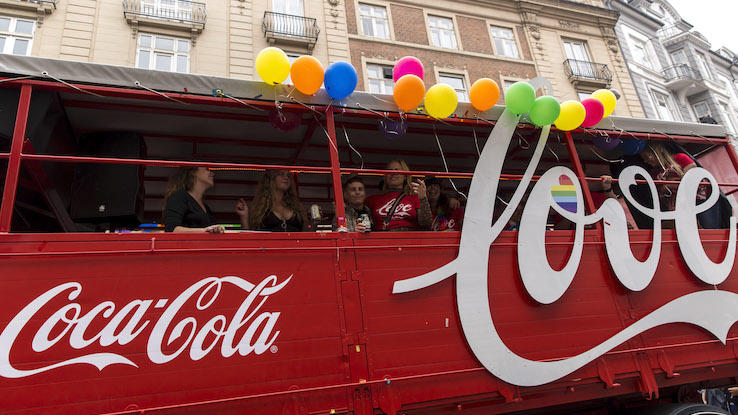
Live Positively focuses on energy efficiency, climate protection, sustainable packaging, active healthy living, water stewardship, quality beverages, fostering community and creating various and safe work environments. The company besides committed to reducing sugar in its drinks and has cutting carbon emissions related to the production of its products.
Rolling in the Dough
The Coca-Cola brand today is worth an estimated $83.8 billion. That's more the profits of Budweiser, Subway, Pepsi and KFC combined. With a stacked production portfolio of more than than 3,500 beverages (and 500 brands), including sodas, energy drinks and soy-based drinks, it'due south easy to see why.

Coke has so many different beverages that you could drinkable one a solar day for nine years without drinking them all. 20 brands owned past Coke generate more than than $1 billion each in sales per twelvemonth. Those powerhouse brands include Minute Maid, Powerade, Sprite, Simply Orange, Fanta, Dasani and, of grade, the original Coca-Cola.
Source: https://www.consumersearch.com/technology/strange-interesting-history-coca-cola?utm_content=params%3Ao%3D740007%26ad%3DdirN%26qo%3DserpIndex
0 Response to "Splash of Coca Cola Clip Art Splash of Water"
Post a Comment